

Quick Answer
The choice between American muscle vs JDM (Japanese Domestic Market) cars depends on what you value most in a performance car. American muscle cars typically appeal to enthusiasts seeking powerful engines, strong straight-line acceleration, and bold styling. JDM cars are often associated with lightweight engineering, agile handling, tuning potential, and motorsport-inspired driving experiences. For Indian buyers, the better choice also depends on road conditions, vehicle availability, import eligibility, right-hand-drive (RHD) requirements, and total ownership costs.
Introduction
Performance car enthusiasts often find themselves choosing between two distinct automotive cultures: American muscle and Japanese Domestic Market (JDM) cars.
American muscle cars are known for their commanding road presence, large-displacement engines in many variants, and emphasis on acceleration. JDM cars, meanwhile, have earned a strong following through models associated with precise handling, turbocharged performance, lightweight engineering, and extensive aftermarket tuning communities.
For Indian enthusiasts, this comparison goes beyond speed and engine specifications. Importing a vehicle requires careful consideration of road conditions, steering configuration, regulatory requirements, parts availability, and long-term maintenance.
Understanding these differences can help buyers identify the performance car that suits their driving style and ownership expectations.
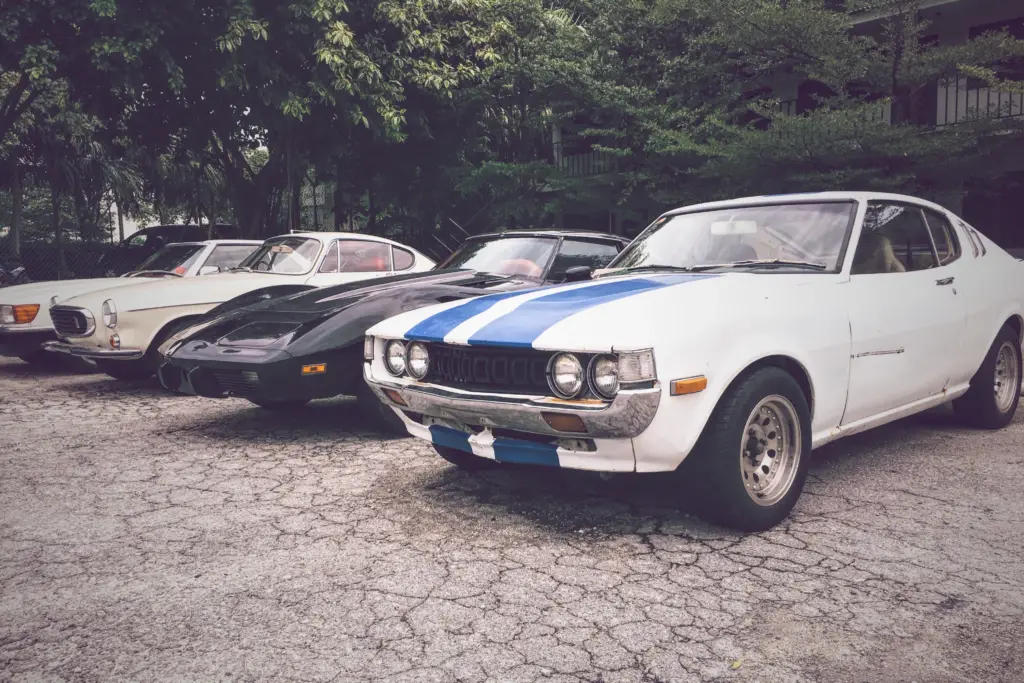
American Muscle vs JDM: At a Glance
| Factor | American Muscle | JDM Cars |
| Driving character | Often focused on strong acceleration and high-performance cruising | Varies by model, from agile sports cars to powerful performance coupes |
| Engine philosophy | Many traditional models use large-displacement V8 engines | Includes naturally aspirated, turbocharged, inline-four, and six-cylinder configurations |
| Handling | Depends on the model, tyres, suspension, and setup | Depends on the model, chassis, suspension, and setup |
| Styling | Bold proportions and muscular design | Ranges from understated sports coupes to aggressive performance cars |
| Modification potential | Engine, exhaust, suspension, braking, and styling upgrades | Engine tuning, turbo upgrades, suspension, braking, and styling modifications |
| Ideal buyer | Enthusiasts who value road presence and strong acceleration | Enthusiasts who value driving precision, tuning culture, or Japanese performance heritage |
These are broad tendencies rather than universal rules. Modern American performance cars can handle exceptionally well, while JDM vehicles can deliver substantial power. The individual model and configuration matter more than the category alone.
What Are American Muscle and JDM Cars?
American Muscle Cars
American muscle cars traditionally combine powerful engines, rear-wheel-drive layouts in many classic examples, and a design focused on performance and road presence. Modern interpretations combine this heritage with contemporary chassis engineering, braking systems, and electronic driving aids.
Examples include the Ford Mustang GT, Chevrolet Camaro SS, and Dodge Challenger performance variants.
Their appeal lies in the combination of acceleration, distinctive styling, and an engaging driving experience. However, performance and practicality vary considerably between models and generations.
Japanese Domestic Market Cars
JDM specifically refers to vehicles produced for Japan’s domestic market. In everyday enthusiast discussions, the term is also used more broadly for Japanese performance cars and vehicles inspired by Japan’s tuning culture.
Examples associated with Japanese performance include the Nissan Skyline GT-R, Toyota Supra, and Honda Civic Type R, although availability, specifications, and steering configurations differ by generation and market.
These vehicles attract enthusiasts through their engineering, handling characteristics, motorsport heritage, and opportunities for carefully planned modifications.
An important distinction is that a Japanese-brand car sold in another country is not automatically a Japanese domestic-market specification vehicle.
Why Each Category Appeals to Indian Enthusiasts
Why Choose American Muscle?
1. Strong acceleration and engine character
Many traditional muscle cars offer substantial engine capacity and strong acceleration. V8-powered variants are particularly attractive to enthusiasts who value their distinctive power delivery and sound.
2. Bold styling
Long bonnets, wide stances, and muscular bodywork give these cars a distinctive presence. They can appeal to buyers seeking a performance car that stands apart from conventional luxury vehicles.
3. Highway and weekend driving
A suitable muscle car can offer an engaging experience on well-maintained roads and during planned weekend drives. Its dimensions and visibility should still be considered before using it regularly in congested urban areas.
Why Choose JDM?
1. Driver-focused engineering
Many Japanese performance cars are valued for their chassis balance, steering response, and handling. These characteristics can appeal to enthusiasts who enjoy driving through corners rather than focusing exclusively on straight-line acceleration.
2. Tuning and modification culture
JDM enthusiast culture includes engine tuning, suspension upgrades, braking improvements, and motorsport-inspired builds. However, the scope for modifications depends on the specific vehicle, component compatibility, reliability goals, and applicable regulations.
3. A broad range of performance experiences
JDM cars cover a wide spectrum, from compact, lightweight sports cars to high-powered performance coupes. This variety makes it important to compare specific models instead of assuming every Japanese performance car follows the same formula.
Performance Comparison: Which Is Better?
| Ford Mustang GT | American muscle | V8 performance and iconic styling | Buyers prioritising acceleration and road presence |
| Chevrolet Camaro SS | American muscle | Performance-oriented coupe character | Enthusiasts seeking an engaging sports-coupe experience |
| Nissan Skyline GT-R | Japanese performance / JDM-associated | Performance engineering and all-wheel-drive heritage in relevant generations | Enthusiasts interested in Japanese performance history and engineering |
| Toyota Supra | Japanese performance / JDM-associated | Sports-car styling and performance potential, depending on generation | Buyers seeking a distinctive sports car with tuning appeal |
Model specifications, drivetrain layouts, performance figures, and equipment vary by generation and market. The table compares broad positioning rather than claiming a universal performance ranking.
Acceleration vs Handling
American muscle may be the preferred option for buyers who enjoy strong acceleration and a powerful engine character. JDM performance cars may appeal more to drivers who value steering precision, cornering behaviour, and chassis responsiveness.
Neither category automatically wins. A modern muscle car can deliver impressive handling, while certain JDM cars offer formidable acceleration. A meaningful comparison requires evaluating specific models, their power-to-weight ratios, transmission options, tyres, braking systems, and intended driving conditions.
Which Is More Practical for Indian Roads?
Indian road conditions can include potholes, uneven surfaces, speed breakers, narrow streets, and heavy traffic. Ground clearance, visibility, turning radius, vehicle width, and suspension setup can therefore matter as much as outright performance.
A compact performance coupe may be easier to manoeuvre in some settings, but this is not guaranteed across all JDM models. Similarly, some American performance cars are comfortable cruisers, while others have low ride heights and wide bodies that require additional care.
Assess the exact vehicle rather than relying on its country of origin.
Importing American Muscle Cars and JDM Vehicles to India
For buyers exploring American muscle car imports India or looking for JDM car importers in India, import eligibility should be established before selecting a vehicle.
1. Verify Import Eligibility
Import conditions may depend on the vehicle’s age, condition, original market, import category, documentation, and applicable regulations. Confirm the current requirements for the specific car and proposed import route before making a financial commitment.
2. Check Steering Configuration
Many American-market muscle cars are left-hand drive. Japanese domestic-market vehicles are often right-hand drive, but this varies by model and specification.
RHD suitability is an important consideration for Indian road use. If conversion is required, technical feasibility and regulatory eligibility must be evaluated separately. A conversion does not automatically guarantee approval or registration.
3. Confirm Registration and Compliance
Check applicable requirements relating to vehicle documentation, emissions, safety, customs clearance, and registration. Do not assume that a car can be registered merely because it is available overseas or has undergone modifications.
4. Plan for Maintenance
Imported performance cars may require specialist technicians and model-specific components. Before buying, assess parts availability, servicing arrangements, and the potential time required for repairs.
Customisation: Building the Right Performance Car
Both categories offer opportunities for personalisation, but modifications should support the intended driving experience rather than compromise reliability.
For American muscle cars, buyers may consider compatible suspension, braking, wheel, tyre, interior, or exhaust upgrades.
For JDM cars, common enthusiast interests include engine tuning, turbocharger upgrades where applicable, suspension adjustments, braking improvements, and motorsport-inspired styling.
In both cases, modifications should be assessed for mechanical compatibility, roadworthiness, safety, and legal compliance. Changes to steering, suspension, emissions-related systems, or other regulated components require particular care.
What Determines the Cost of Importing These Cars?
The final cost of importing either category depends on several factors:
- Overseas purchase price and vehicle condition.
- Model year, variant, rarity, and market demand.
- Shipping and transit insurance.
- Applicable customs duties and taxes.
- RHD conversion requirements, where relevant.
- Compliance, documentation, and registration-related expenses.
- Maintenance, replacement parts, and specialist servicing.
There is no reliable universal price difference between American muscle and JDM imports. A rare Japanese performance car may cost substantially more than a common American model, while a sought-after muscle car can command a significant premium.
Compare the estimated landed cost and long-term ownership expenses for the actual vehicles under consideration.
How Daytona Exotics Can Assist
Daytona Exotics specialises in luxury car importing and RHD conversion-related services for Indian buyers. For enthusiasts comparing American muscle and JDM vehicles, the process should begin with the preferred model, intended use, sourcing requirements, and technical feasibility.
The import plan should then account for applicable compliance requirements, conversion needs, estimated cost components, and delivery arrangements.
Buyers should confirm the exact scope of sourcing, import assistance, conversion, customisation, and delivery services available for their selected vehicle. Technical feasibility and registration requirements should be clarified before proceeding.
Expert Insight: Choose Your Driving Experience, Not Just the Badge
The most useful way to compare American muscle and JDM cars is to identify the experience you want from the vehicle.
If you value a distinctive engine character, straight-line acceleration, and commanding styling, an American muscle car may be the stronger fit. If you prefer a particular combination of handling, engineering, and tuning potential, a suitable JDM performance car may be more appealing.
However, neither choice should be made on reputation alone. Compare the actual vehicle’s condition, specifications, steering configuration, maintenance needs, and compliance pathway.
For Indian buyers, a well-informed purchase starts with verifying whether the specific car can be imported and registered, followed by calculating its realistic landed cost and ongoing ownership requirements.
Common Mistakes to Avoid
- Comparing categories instead of specific cars: A model-by-model comparison gives a more meaningful picture of performance.
- Focusing only on horsepower: Consider weight, tyres, brakes, suspension, and real-world usability.
- Assuming every JDM car is RHD: Verify the original steering configuration of the exact vehicle.
- Overlooking import eligibility: Confirm applicable requirements before paying a deposit.
- Ignoring maintenance and parts: Specialist repairs can affect both running costs and vehicle downtime.
- Underestimating conversion complexity: Technical feasibility does not guarantee regulatory approval.
- Budgeting only for the purchase price: Include shipping, duties, taxes, compliance, and long-term maintenance.
Planning to Import Your Dream Luxury Car?
Choosing the right vehicle is only the first step. From sourcing and import planning to RHD conversion and delivery, work with a trusted luxury car importer in India to navigate the process with greater clarity. Connect with Daytona Exotics to explore your options and plan your luxury car import.
Conclusion
The American muscle vs JDM debate has no universal winner. American muscle cars typically appeal to enthusiasts seeking strong acceleration, distinctive engine character, and bold styling. JDM performance cars offer a diverse range of driving experiences, including agile handling, engineering-focused performance, and tuning potential.
For Indian enthusiasts, the better choice is the car that matches their driving preferences, road conditions, budget, and ownership expectations while meeting applicable import and registration requirements.
Before choosing between American muscle car imports India and JDM options, compare specific vehicles, verify their compliance pathway, and calculate the total cost of ownership. This approach helps turn an enthusiast’s dream into a more informed purchasing decision.
Explore our website gallery and follow Daytona Exotics on Instagram, LinkedIn, and Facebook for curated additions, ownership insights, and market updates.
Frequently Asked Questions
Q1. What is the main difference between American muscle and JDM cars?
A. American muscle cars traditionally emphasise powerful engines, acceleration, and bold styling. JDM performance cars cover a broader range of engineering approaches, often attracting enthusiasts through handling, tuning potential, and motorsport heritage.
Q2. Are American muscle cars faster than JDM cars?
A. Not necessarily. Performance depends on the exact models, engines, weight, drivetrain, transmission, tyres, and tuning. Specific vehicles should be compared using reliable performance data.
Q3. Can I import American muscle cars to India?
A. Importing may be possible if the specific vehicle and import route meet applicable requirements. Verify current eligibility, documentation, customs obligations, and registration conditions before purchasing.
Q4. Are JDM cars easier to import into India?
A. Not automatically. Steering configuration, vehicle specifications, import eligibility, documentation, and compliance requirements all affect the process. A Japanese origin or RHD layout does not guarantee import or registration approval.
Q5. Which is better for Indian roads, American muscle or JDM?
A. It depends on the specific model and road conditions. Compare ground clearance, dimensions, visibility, turning radius, suspension, and maintenance requirements before deciding.
Q6. How do I choose between American muscle car imports and JDM imports?
A. Start with your preferred driving experience and budget. Then evaluate specific models, vehicle condition, import eligibility, RHD requirements, estimated landed cost, parts availability, and long-term servicing needs.

